婉君
长隆携手智元,在横琴打造全球首个具身智能主题乐园_我的网站

A |
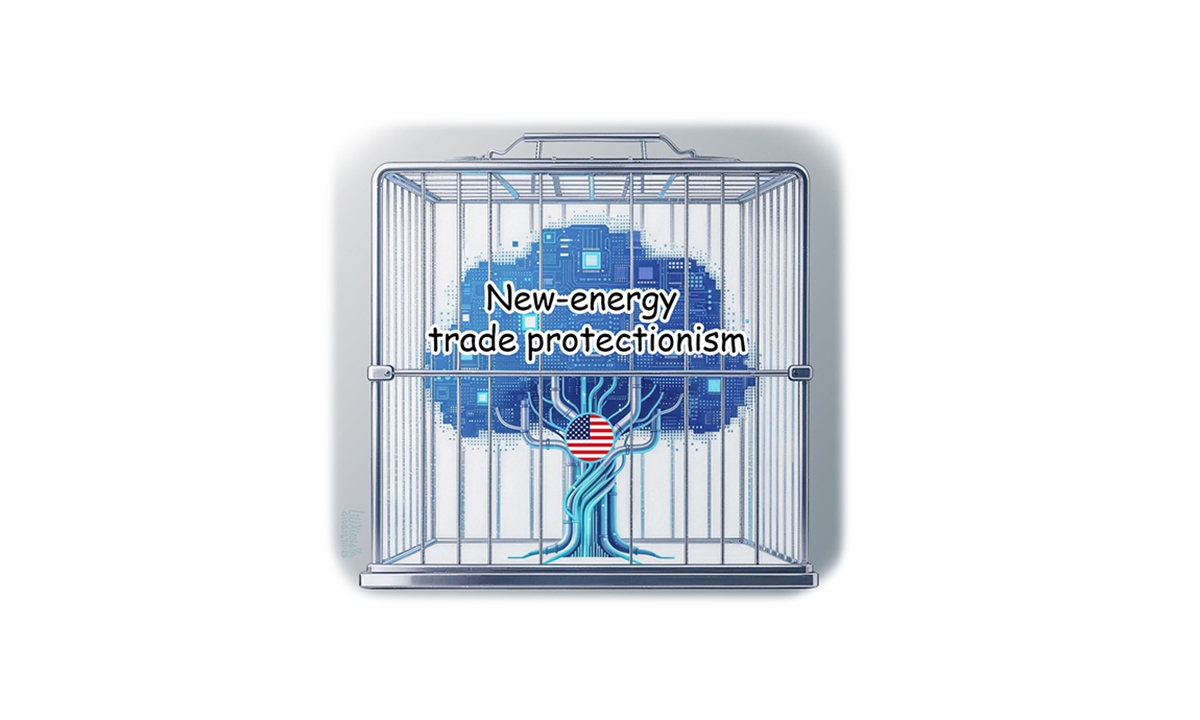
Illustration: Liu Xiangya/GT
Recent media reports have questioned whether a natural gas plant built to power an Amazon data center project in Texas could become the largest climate polluter in the US. The controversy, whatever the eventual outcome, offers a reality check for America's artificial intelligence (AI) drive.
It exposes a growing contradiction: The US is racing to expand its AI capabilities, yet its protectionist trade policies are making it harder and more costly to access some of the clean-energy technologies needed to sustain that expansion. This raises a broader question: Can an energy-intensive AI race afford the costs of renewable energy protectionism?
The US is entering a new era of rising electricity demand. Data centers, the backbone of the AI economy, are emerging as one of the fastest-growing sources of power consumption. Much of that demand is still being met by fossil fuels: The International Energy Agency reports that natural gas supplies more than 40 percent of the electricity used by data centers in the US, making it their largest source of power.
So, it's not surprising that the expansion of data centers has raised concerns over their environmental impact and the pressure they could place on local power systems and electricity bills. A Gallup survey conducted in March found that seven in 10 Americans opposed the construction of AI data centers in their local area, including 48 percent who strongly opposed such projects.
The findings point to a broader challenge for the US: The race to develop AI is increasingly becoming a race to meet growing energy needs. Addressing this challenge will require more than advances in computing technology; it will also depend on an energy system capable of delivering large amounts of reliable, affordable and cleaner power. That, in turn, will require faster development and broader deployment of clean-energy technologies, from solar power to energy storage.
Yet in the clean-energy sector, the US has increasingly relied on protectionist trade measures that limit access to cost-competitive products from global markets. The country has placed greater emphasis on expanding domestic manufacturing capacity, but rebuilding entire clean-energy supply chains at home is a costly and time-consuming process. Even if expanded domestic production is achieved, it is likely to come at a higher cost, making the deployment of renewable technologies more expensive and potentially slower.
The solar industry offers a clear illustration of this policy direction. The US has continued to expand trade barriers in the sector. Reuters reported that the US government announced on Thursday a series of price floors and a 15 percent tariff on products made from polysilicon, a raw material used in solar panels.
The challenge lies in the limited scale of the US polysilicon industry. Reuters reported that the country has two polysilicon factories. Against this backdrop, relying on domestic polysilicon production while restricting access to imports runs counter to the goal of expanding solar power in the US. The country risks creating barriers that ultimately constrain its own access to the global supply chains needed for growth.
The pressing issue for the US is the speed at which new power demand is emerging. The expansion of data centers is creating electricity needs that cannot wait for domestic clean-energy capacity to develop gradually. Global supply chains can provide the scale and speed required in the near term. By narrowing access to these sources, the US risks turning clean-energy policy into a drag on the infrastructure needed for its AI race.
The US has placed AI high on its economic and technological agenda. The outcome of this race will matter greatly, as financial markets are also watching whether America can turn its AI efforts into commercial success.
This leaves the US with a difficult choice: Can it afford the cost of clean-energy protectionism while racing to build AI infrastructure? The answer may be no. Trade barriers that limit access to competitive renewable technologies could ultimately become a constraint on the AI expansion that Washington is seeking to accelerate.
The author is a reporter with the Global Times. [email protected]
。 8月23日,长隆集团与智元创新(上海)科技股份有限公司(以下简称“智元”)战略合作签约仪式在横琴举行。立足广东完备产业基础与超大规模文旅应用市场,双方以“文旅+科技”深度融合模式开展全方位合作,合力打造全球首个沉浸式具身智能主题乐园,布局具身智能主题酒店、具身智能马戏演艺全新业态,探索产业融合新范式,构建具身智能文旅全产业链生态,树立全球应用新标杆。 深耕37载,长隆集团以科技推动文旅新跃进
横琴长隆国际海洋度假区
据了解,长隆集团的文旅事业始于1989年创办的长隆香江酒家,1997年首个主题公园落成,开创中国本土主题乐园发展新篇。2008年,长隆正式进驻横琴富祥湾,彼时横琴尚为一片滩涂,与澳门隔海相望。 得天独厚的区位与自然禀赋,坚定了长隆集团打造世界级文旅目的地的决心。

B | 37年来,长隆集团专注文旅实业,持续创新,其度假区共创下17项吉尼斯世界纪录,多次荣获TEA西娅奖、IAAPA等国际权威奖项,连续举办八届中国国际马戏节,成为享誉世界的中国文旅名片。 领跑具身智能赛道,智元赋能文旅全新场景
智元是全球率先进入部署态的通用AI机器人领军企业。

C | 2026年上半年,其人形机器人出货量及具身智能大模型评测居全球领先地位;WITA交互大模型为国内首个完成合规备案的行业级大模型。
目前,智元全系主力产品均已获国内外权威认证机构颁发的电气安全、机械安全、功能安全等标准符合性证书,是国内第三方认证产品最全的具身智能企业,在硬件一致性、规模化交付方面达行业顶尖水平。

D | 同时,智元构建了作业智能、运动智能与交互智能融合的全栈模型架构,使机器人具备自主交互、稳定运动、自主规划和复杂任务执行能力。 长隆集团与智元强强联合,打造全球首个具身智能主题乐园
放眼全球,目前尚没有以大规模、多场景、沉浸式叙事为核心的具身智能主题乐园,海外乐园的机器人大多停留在局部试点,难以常态化商业运营。我国拥有完整工业体系、超大规模文旅市场、成熟新型基础设施,发展具身智能文旅赛道具备突出先发优势。广东良好的产业土壤,也为本项目落地提供有力支撑,助力塑造科技赋能文旅的国际竞争新优势。 本次长隆集团和智元两大品牌的强强联合,将立足长隆集团深厚的IP积淀与丰富的文旅实景场景,依托智元创新领先的具身智能技术能力,多维探索科技文旅融合新路径。

E | 未来,合作双方将推动长隆集团自有IP创新活化,把智能交互融入科普讲解、园区巡游、酒店服务等全场景,为游客带来耳目一新的沉浸式游玩体验;同时落地全球首创的具身智能文旅全新业态,在横琴长隆飞船乐园打造全球首个具身智能主题乐园,拓展机器人实景演绎与商业运营完整闭环。 与此同时,长隆集团和智元还将共建文旅行业具身智能联合实验室,扎根长隆集团多个园区开展技术攻关与场景验证,为人形机器人在文旅消费领域的规模化应用打造示范样本,共同书写中国民族文旅产业创新发展的崭新篇章。
长隆集团创始人、董事长苏志刚表示,科技创新是文旅高质量发展的核心密码。长隆集团始终坚持自主创新定义行业标杆,具身智能将推动文旅体验革新,助力产业从观光打卡迈向深度沉浸式体验。 智元创始人、董事长兼CEO邓泰华认为,机器人不仅会成为人们工作的得力助手,也会成为日常生活中亲密伙伴。

F | 智元将与长隆集团联手打造全球首个、规模最大、场景最丰富、技术最先进的大型具身智能主题乐园,不仅通过机器人为人们带来欢乐,更是打开了通往未来时空的大门,塑造机器人原生一代的科技认知与创新视野。 有业内专家评价,本次合作是国内文旅与具身智能跨界融合的标志性事件。

G | 不同于行业零散单点的机器人展示,项目贯通IP创作、内容编导、场景运营、底层研发完整链条,形成产业闭环。长隆集团为国产机器人提供全天候大流量测试环境,加速技术迭代降本;智元则赋能文旅体验升级,催生演艺、IP衍生等新消费,精准响应国家“人工智能+消费”、发展新质生产力的战略部署。

H | 图片来源:南方+APP、长隆集团返回,查看更多。
Current article:http://y42y.wenwancaomohenenqiongpangshun.bond/list_rrrmok/rz4yg50.html
Published on:09:15:09
